FHKI Releases “Made by Hong Kong: Strategies for New Industrialisation” Research Report
FHKI Releases “Made by Hong Kong: Strategies for New Industrialisation” Research Report
15-07-2025
 FHKI Releases
“Made by Hong Kong: Strategies for New Industrialisation” Research Report
Urges Swift Formulation of a Medium- to Long-Term Strategy
Federation of Hong Kong Industries (FHKI) held a press conference and policy forum today (15 July) to release the research report, “Made by Hong Kong: Strategies for New Industrialisation”. The event was honoured by the presence of FHKI Honorary President and President of the Legislative Council the Hon Andrew Leung, Deputy Head of Chief Executive’s Policy Unit Nicholas Kwan, and Deputy Government Economist Dr Cecilia Lam. As one of the key projects for FHKI’s 65th anniversary, the research, commissioned by FHKI, was conducted by the Hong Kong Institute of Economics and Business Strategy (HIEBS) at the University of Hong Kong and funded by the Trade and Industrial Organisation Support Fund under the Trade and Industry Department. The Report estimates that in 2023, Hong Kong industry contributed 4.4% of the city’s GDP, while industry-related producer services accounted for 16.2%. These figures highlight the vital role of industry and its related upstream and downstream sectors in the local economy. The Report puts forward seven key policy initiatives, recommending the Government promptly formulate a strategy for new industrialisation, with a focus on developing high-end manufacturing and ensuring sufficient talent and resources are allocated to support industrial development.
FHKI Chairman Dr Steve Chuang pointed out that new industries are crucial for revitalising Hong Kong's economy, serving as a new growth point while supporting the vast producer services sector. He remarked, “New industries have become the core driving force of our local industry. They serve not only as a new engine for Hong Kong’s economic development but also underpin the producer services sector, which includes R&D, logistics, and professional services. We urge the Government to consider the report's recommendations and formulate a medium- to long-term development plan for new industrialisation. This plan should vigorously develop high-end manufacturing in strategic areas such as advanced materials and electronics, big health industry, food technology and processing, and green technology. This will consolidate our traditional advantages and drive economic diversification.”
The research found that a majority of the surveyed Hong Kong-invested industrial enterprises place a high priority on R&D investment. For 2024, 46.4% of these enterprises anticipate that their R&D investment will account for 5% or more of their total revenue, with 67.5% expecting it to be 3% or more. When compared with 2019, 45.3% of the surveyed enterprises project an increase in their R&D investment for 2024. Prof Heiwai Tang, Associate Dean (External Relations) of HKU Business School and Associate Director of the HIEBS, stated, “It is encouraging to see surveyed Hong Kong-invested industrial enterprises placing strong emphasis on R&D investment, with nearly half indicating that their R&D spending accounts for 5% or more of total revenue in 2024. Additionally, 81% of these companies are optimistic about investment trends in Southeast Asia, suggesting that Hong Kong-invested industrial enterprises may continue to advance a 'China+N' supply chain strategy. Looking at developed economies such as Singapore and Switzerland, the development of new industries has achieved remarkable success. The HKSAR Government can learn from these successful regions, leverage Hong Kong’s unique advantages, and actively participate in both global supply chain restructuring and the overseas expansion of Chinese enterprises, thereby promoting the development of new industrialization and producer services.”
The Report puts forward the new concept of Brand•Hong Kong, which showcases the Hong Kong industrial ecosystem's exceptional R&D capabilities, innovative industrial design, superb manufacturing craftsmanship, stringent quality control, highly efficient supply chain operations, world-class producer services, and trusted business reputation. Ricky Chan, FHKI Executive Deputy Chairman and Chairman of the Steering Committee for this research project, stressed that Hong Kong industry is a hallmark of quality and reliability, and that he hopes the Government and the industry will work together to promote it. He said, “The Brand•Hong Kong concept proposed in the Report embodies the world-class, top-tier strengths of the Hong Kong industrial ecosystem in innovation, management, design, production technology, and related professional services. We hope the Government and the industry will collaborate to promote this brand. This includes continuing to provide support through the BUD Fund, expanding the scope of E-commerce Easy to cover Belt and Road markets, and assisting SMEs with livestream commerce. Such efforts will raise the profile of Brand•Hong Kong among external audiences and thereby create a price premium for its products and services.”
Drawing on local and Mainland China’s data, international case studies, and insights from focus groups with Hong Kong manufacturers, the report advocates for seven policy recommendations to shape the future of new industrialisation:
|
1. Developing High-End Manufacturing
Amid global supply chain restructuring and technological innovation, many Asian cities are advancing in high-end manufacturing and producer services. With new industries as a key driver for future growth, and given the interplay between upstream producer services and downstream industry, the FHKI advocates that the Government charts a clear path for developing high-end manufacturing. This includes prioritising strategic sectors such as advanced materials and electronics, big health industry, and food technology and processing. Furthermore, high-potential sectors such as green technology (including waste recycling), sustainable building materials, and low-carbon manufacturing solutions should also be designated as strategic industries. A clear government direction will catalyse Hong Kong's economic transformation, revitalise local industry, and reinforce traditional strengths in R&D, design, and trade, ensuring the continued vibrancy of the producer services sector.
2. Building a Talent Pool for Industry and Producer Services
Cultivating an Innovation-Driven Culture
FHKI suggests a multi-pronged approach: flexibly attracting overseas talent while simultaneously cultivating a local workforce. This includes launching a comprehensive and forward-looking talent development strategy with Key Performance Indicators (KPIs) for annual review; regularly reviewing the Technical Professional List and continuing the Enhanced Supplementary Labour Scheme; and considering a dedicated platform to match local enterprises with overseas technical professionals, supported by streamlined visa facilitation.
To nurture local talent, FHKI recommends increasing financial support for university R&D, encouraging leading enterprises to establish joint R&D centres and training programmes with local universities, and promoting schemes like the "Research, Academic and Industry Sectors One-plus Scheme" to consolidate Hong Kong's advantages in basic research, foster collaboration among the government, industry, academia, research, and investment sectors, and enhance the ability to commercialise research outcomes. Furthermore, FHKI urges the Government to continue strengthening vocational and professional education to cultivate technical professionals for the industry.
3. Providing Development Incentives for New Industrial Enterprises
FHKI believes the Government should capitalise on Hong Kong's advantages as an international financial centre by assisting enterprises in securing capital, thereby encouraging new industrial enterprises to develop their R&D and advanced manufacturing operations in Hong Kong. FHKI also recommends that the Government establish a one-stop service platform to support enterprises seeking financing in Hong Kong with site selection, R&D, and advanced manufacturing. At the same time, funding schemes should be enhanced by including more industry professionals in the vetting process, introducing a fast-track application channel, and establishing a “tolerance mechanism” (容錯機制), allowing industrial enterprises to obtain timely and sufficient resources for their development.
4. Applying Artificial Intelligence to Enhance Administrative Efficiency
FHKI recommends that the Government draw reference from the practices of certain Mainland municipal government by fully utilising artificial intelligence technology within the application process for government schemes. This would serve to improve the vetting process and enhance regulatory efficiency, whilst also enabling the more precise dissemination of information on suitable funding schemes and the latest policies to eligible enterprises, thereby creating a business environment conducive to innovative development.
5. Establishing the Brand•Hong Kong to Support Local Businesses in Expanding Sales Markets
Brand•Hong Kong, as a new concept, represents the Hong Kong industrial ecosystem's exceptional R&D capabilities, innovative industrial design, superb manufacturing craftsmanship, stringent quality control, highly efficient supply chain operations, world-class producer services, and trusted business reputation. FHKI hopes that the Government and the industry will actively invest in promoting the Brand•Hong Kong concept. This includes continuing to provide funding support such as the BUD Fund, expanding the scope of E-commerce Easy to cover Belt and Road markets, assisting SMEs with livestreaming e-commerce, and supporting collaborations between Hong Kong enterprises and internationally renowned brands. The aim is to enhance awareness of Brand•Hong Kong both locally and in international markets, and to drive a price premium for its products and services.
The FHKI also suggests the Government take the lead in supporting Brand•Hong Kong by incorporating a “Brand•Hong Kong First” principle into its procurement policy. For public projects involving special circumstances, such as public safety, the Government could even consider direct procurement to prioritise the purchase of qualifying Brand•Hong Kong products.
6. Promoting Regional Industrial Integration
Given the high economic growth potential of the Belt and Road region and ASEAN countries, FHKI recommends that the Government promote regional industrial integration through various measures to drive the development of Hong Kong's industry and producer services. Suggestions include further strengthening the function of the Economic and Trade Offices (ETOs) to provide comprehensive support for outbound Hong Kong enterprises. The ETOs could even assist these enterprises in identifying suitable factory locations and overcoming administrative barriers, such as those related to investment approvals and tax registration, thereby accelerating the local implementation of their investment projects.
Furthermore, Hong Kong, as a “super-connector” and “super value-adder”, can actively advance the development of a multinational supply chain management centre, creating a one-stop integrated service platform for enterprises expanding overseas. This platform should offer functions including finance, insurance, policy consultation, legal and accounting services, brand promotion, intellectual property, and logistics. At the same time, the HKSAR Government should continue to promote the mutual recognition of standards with Mainland China, creating a more favourable environment for the local producer services sector to enter the Mainland market.
7. Improving Statistical Methods to Reflect the Up-to-Date Developments in Hong Kong’s Industry
FHKI recommends that the Government refine its statistical methodology to ensure that official data can more accurately reflect the economic contribution of the industrial sector to Hong Kong. It should also establish a publicly accessible industrial database and, through formats such as thematic reports, present the latest data on key industrial sectors, particularly covering industries that receive priority government funding, such as biomedicine, artificial intelligence, and new energy. FHKI believes this approach would assist the Government in monitoring the latest developments in local industry, leading to the more effective formulation and evaluation of its industrial policies.
Following the Report's launch, a policy dialogue was held on the theme of “The Way Forward for Hong Kong New Industrialisation”. During the dialogue, representatives from industry and various organisations analysed the current status, challenges, and opportunities of new industrialisation in Hong Kong, sharing their valuable insights.
FHKI wishes to acknowledge that the successful completion of this research was made possible by the invaluable guidance of the Innovation, Technology and Industry Bureau, the Office of the Government Economist, and the Census and Statistics Department, as well as funding from the Trade and Industrial Organisation Support Fund under the Trade and Industry Department. Furthermore, FHKI is deeply grateful to the Steering Committee of the “Made by Hong Kong: Strategies for New Industrialisation” research project for its stewardship; to the research team from the Hong Kong Institute of Economics and Business Strategy at the HKU Business School for their professional analysis; and to all the enterprises that participated in the focus group discussions and questionnaire surveys. The invaluable contributions from all parties were instrumental to the report's success.
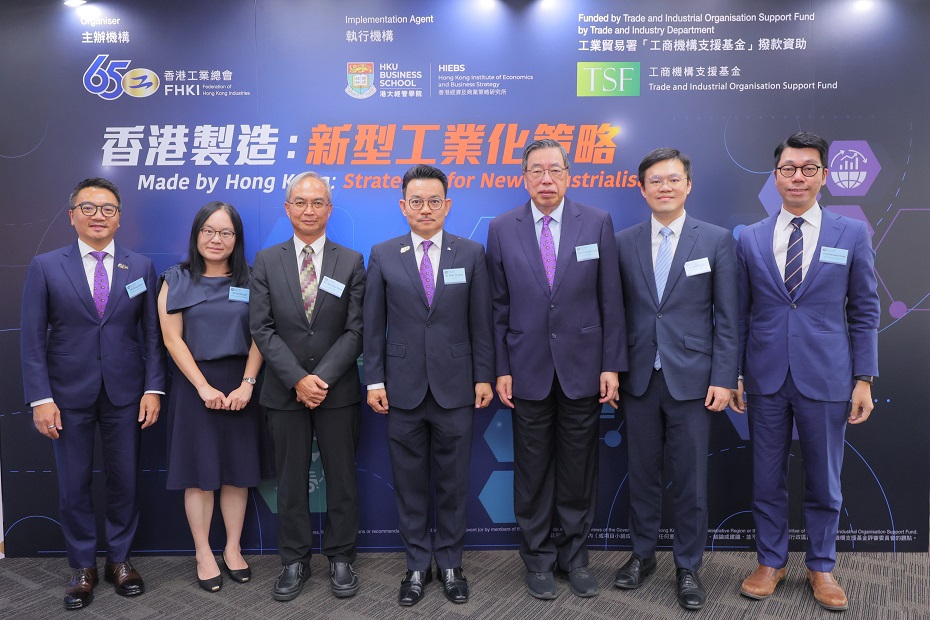
Pic 1: FHKI Chairman Dr Steve Chuang (forth left), Associate Dean (External Relations) of HKU Business School and Associate Director of the HIEBS Prof Heiwai Tang (first right), and FHKI Executive Deputy Chairman and Chairman of Steering Committee of the “Made by Hong Kong: Strategies for New Industrialisation” Research Project Ricky Chan (first left), took a photo with FHKI Honorary President and President of the Legislative Council the Hon Andrew Leung (third right), Deputy Head of Chief Executive’s Policy Unit Nicholas Kwan (third left), Deputy Government Economist Dr Cecilia Lam (second left), and Government Principal Economist Eric Shum (second right).
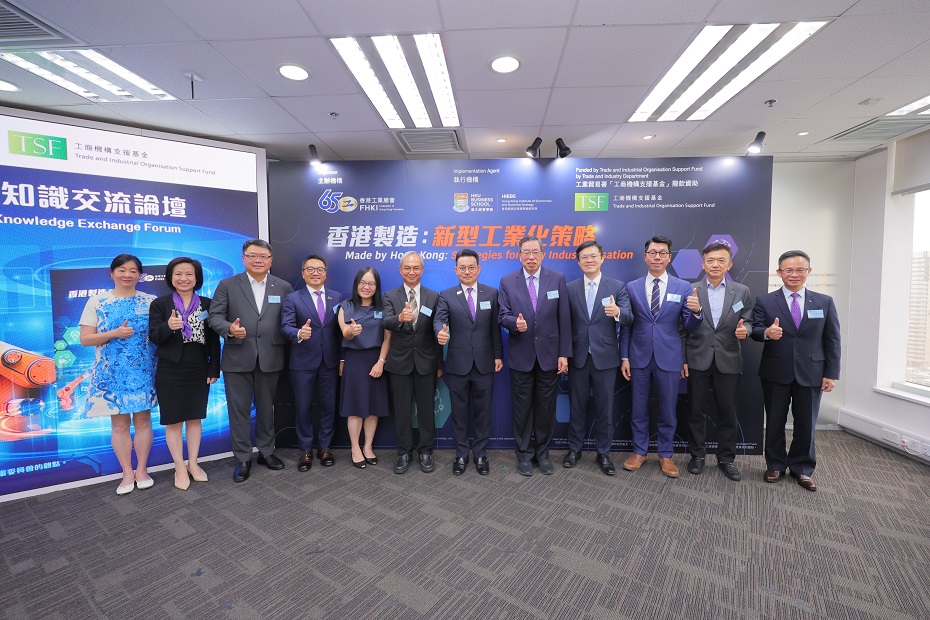
Pic 2: FHKI leadership and representatives from the Government took a photo with the members of the Steering Committee of the “Made by Hong Kong: Strategies for New Industrialisation” Research Project.
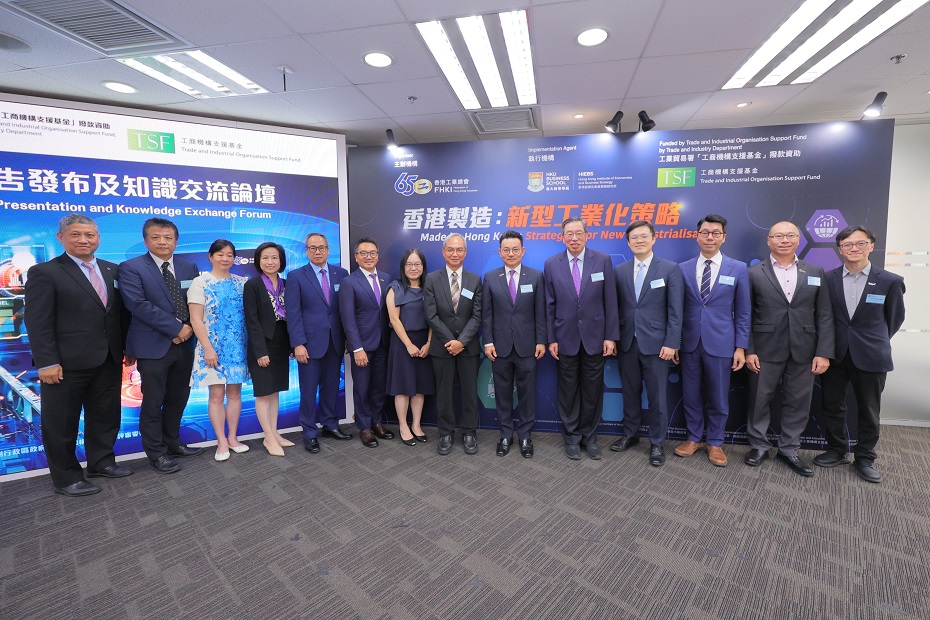
Pic 3: FHKI leadership, guests and panelists of the Policy Dialogue took a group photo.
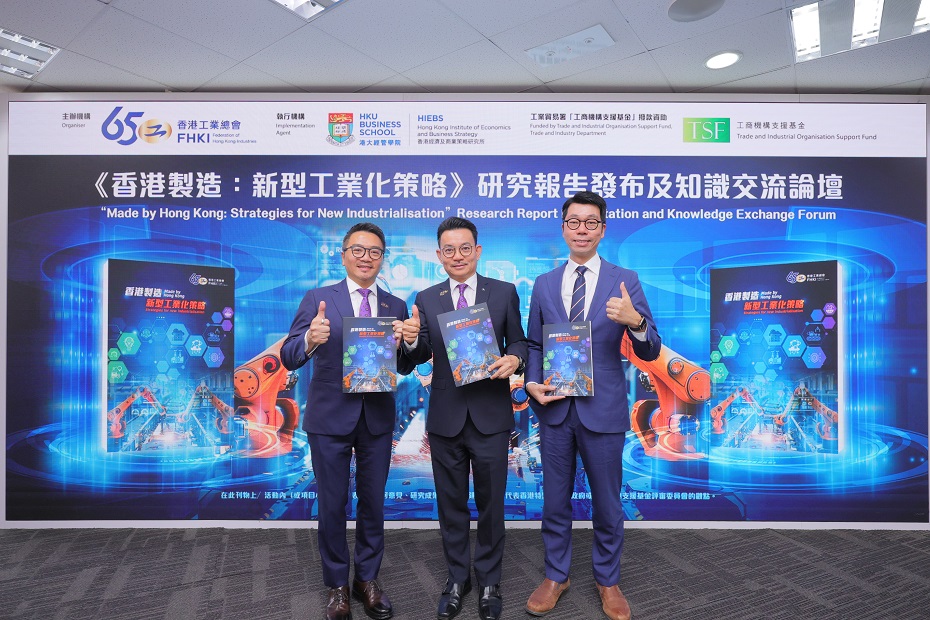
Pic 4: FHKI Chairman Dr Steve Chuang (middle), Associate Dean (External Relations) of HKU Business School and Associate Director of the HIEBS Prof Heiwai Tang (right), and FHKI Executive Deputy Chairman and Chairman of Steering Committee of the “Made by Hong Kong: Strategies for New Industrialisation” Research Project Ricky Chan (left) shared the key findings of the research report.
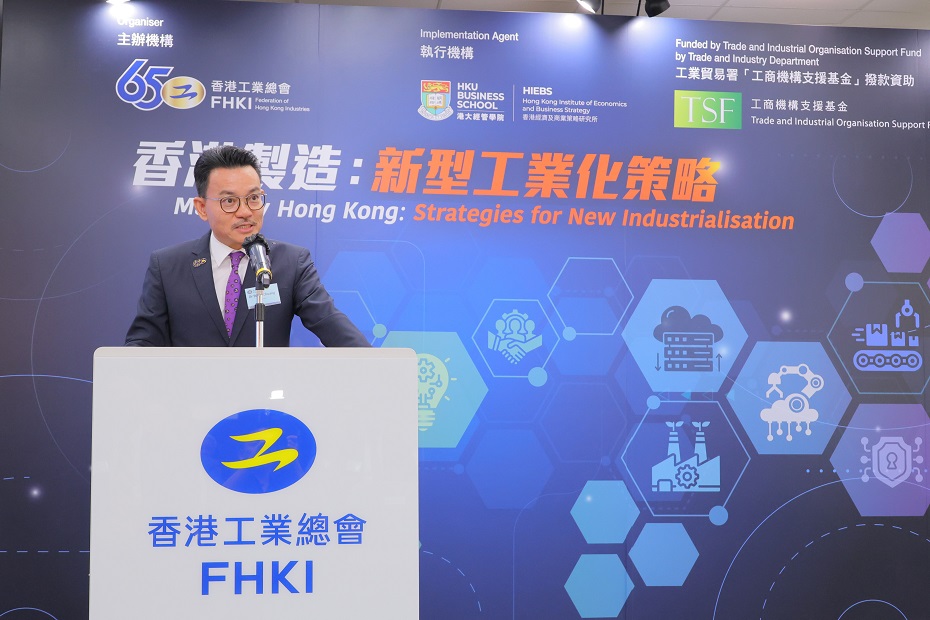
Pic 5: FHKI Chairman Dr Steve Chuang delivered the welcome remarks.
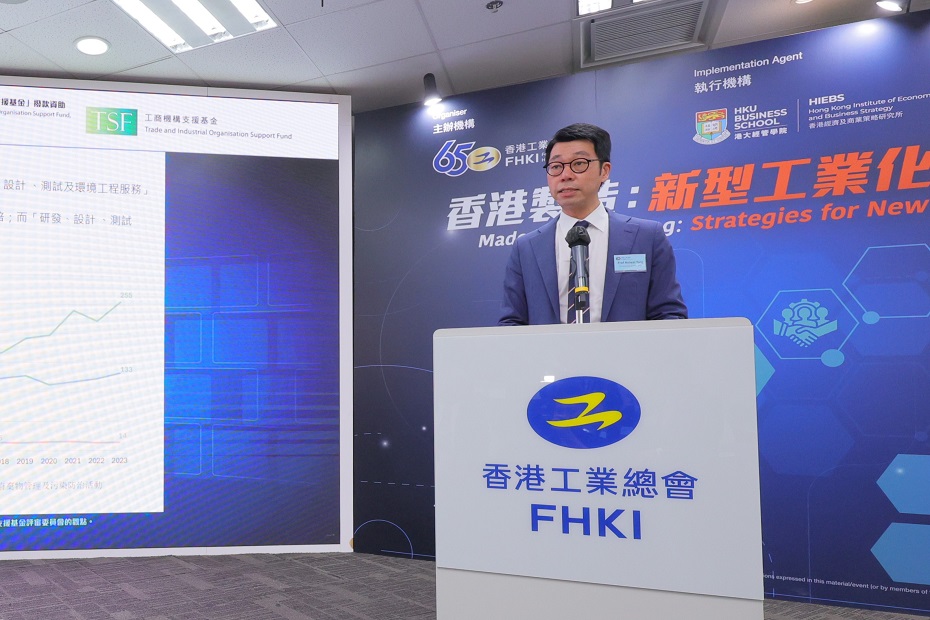
Pic 6: Prof Heiwai Tang, Associate Dean (External Relations) of HKU Business School and Associate Director of the HIEBS, presented the key research findings.
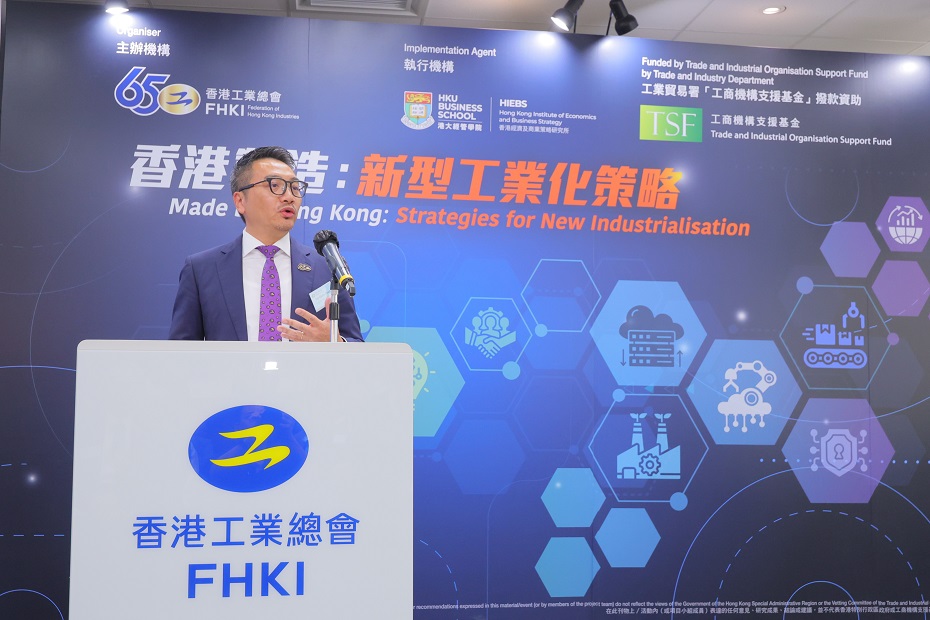
Pic 7: FHKI Executive Deputy Chairman and Chairman of Steering Committee of the “Made by Hong Kong: Strategies for New Industrialisation” Research Project Ricky Chan Ricky Chan presented the policy advocacies outlined in the report and hosted the policy dialogue session.
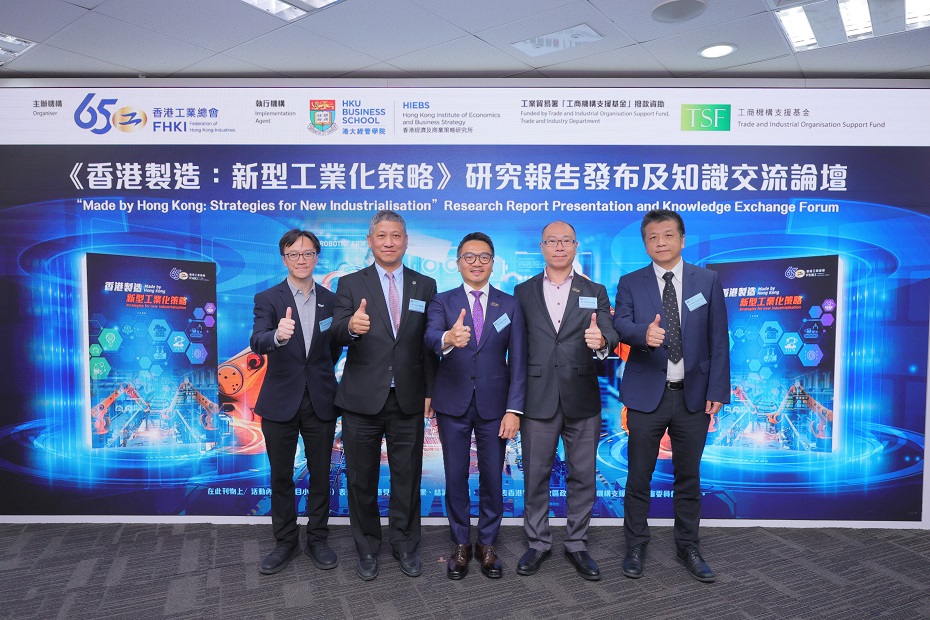
Pic 8: A policy dialogue session themed “The Way Forward for Hong Kong’s New Industrialisation” was held following the press conference. The session was hosted by FHKI Executive Deputy Chairman and Chairman of Steering Committee of the “Made by Hong Kong: Strategies for New Industrialisation” Research Project Ricky Chan (middle). Panelists include (names listed in no particular order): Director of Bechelon Consulting Ltd Toney Chang (second right); Chief Executive Officer of the Hong Kong Microelectronics Research and Development Institute Dr Tony Gao Teng (first right); General Manager of Smart Manufacturing of Hong Kong Productivity Council Ir Samson Suen (first left); and Head of Innofacturing, Hong Kong Science and Technology Parks Corporation Oscar Wong (second left).
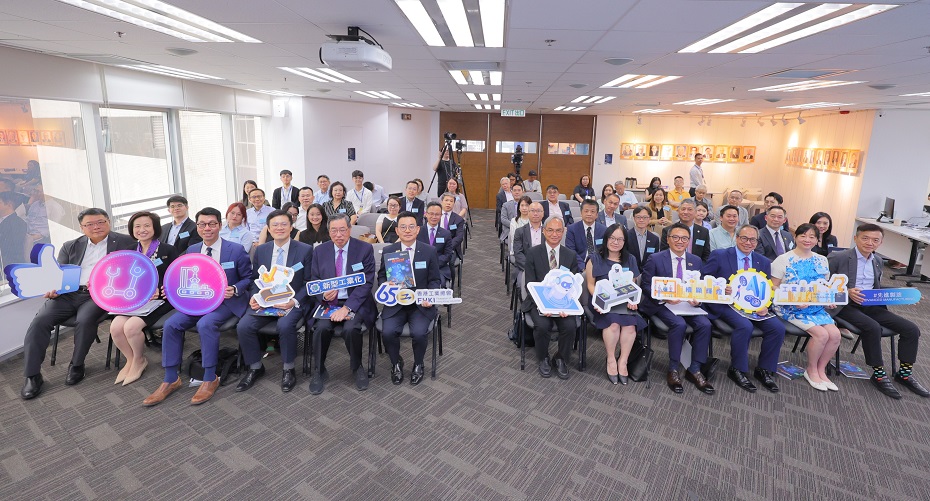
Pic 9: The event drew the participation of numerous FHKI General Committee members, FHKI members, and media representatives.
*Visit here for the executive summary and full research report
*Visit here for high resolution photos
Media Enquiries
Tel: 2732 3156 / 2732 3145
Email: media@fhki.org.hk
